


Content review processes break down quietly. Perhaps copy starts being submitted over email, feedback lives in comment threads, and approvals happen informally - until something goes live that shouldn't have. For QA, compliance, and brand teams managing high volumes of submissions across multiple channels, the lack of a structured workflow isn't just inefficient, it's a liability.
Bold Tech’s Retool template - ‘ReviewDesk’ - shows what a structured, end-to-end content review process could look like. To find out more about Retool, head to our 'What is Retool' guide on our blog, where we have a whole host of other Retool templates, tutorials and resources.
This app template might not be a finished product but it’s a blueprint for inspiration, a starting point from which you can build a custom review tool tailored to your team's approval stages, compliance requirements, and accountability standards. And because it's built on Retool, you can get from template to production-ready in a fraction of the time of traditional development.
- Education
- Healthcare
- Media
- eCommerce
- Logistics ops
- HR/Recruitment
and more! Sign up for our newsletter to ensure you're always getting access to our free resources.
Submissions: a clear queue of everything awaiting review
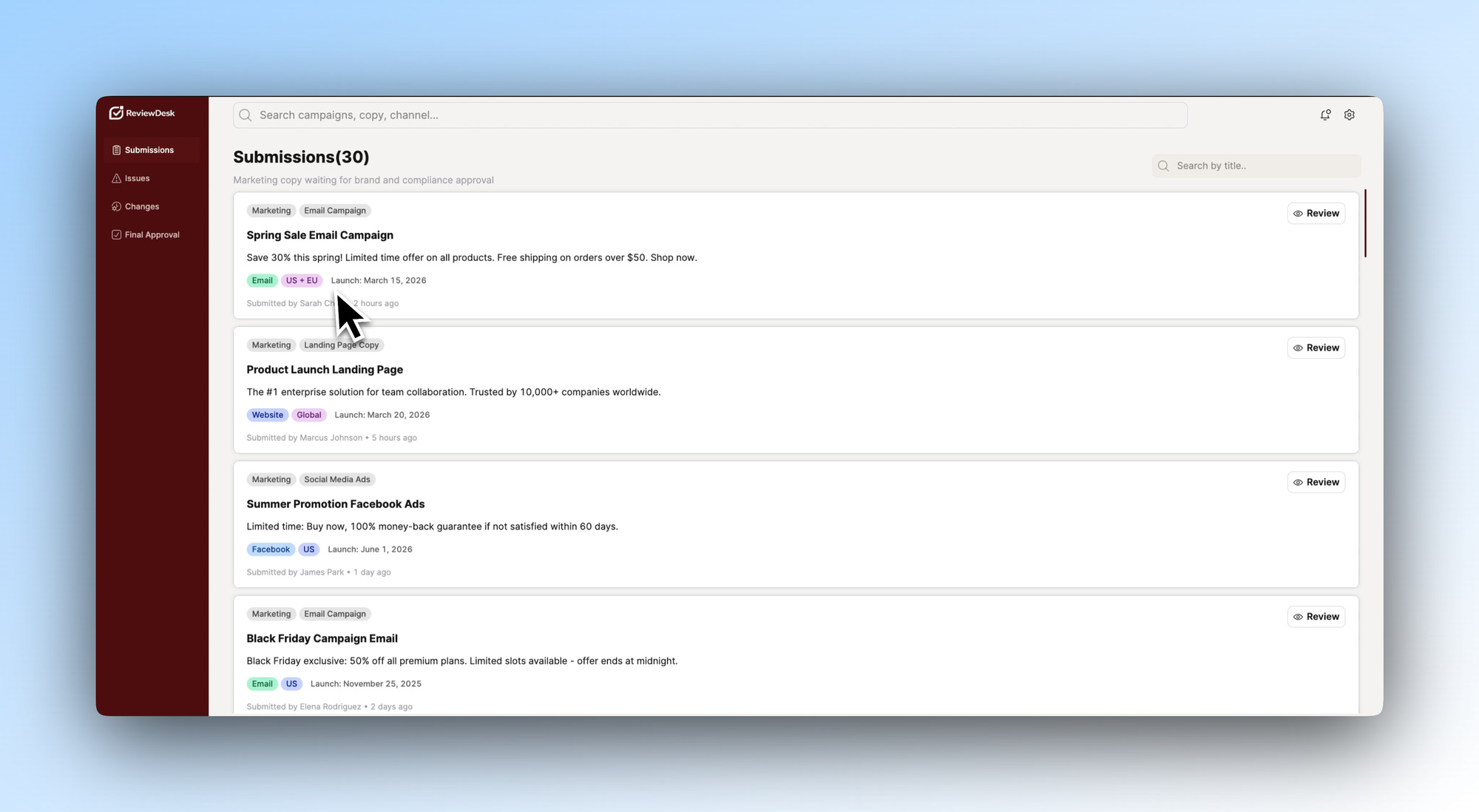
The Submissions tab illustrates how a team might design a single, searchable queue of all content waiting for review. Each submission card shows the campaign name, a preview of the copy, channel and region tags, launch date, and who submitted it - giving reviewers the context they need before they even open the piece.
The design keeps the review queue visible and prioritizable at a glance, rather than buried across inboxes or project management tools. In your own build, you could adapt the tags and metadata to reflect your specific channels, markets, and submission categories.
Issues: structured visibility into what needs fixing
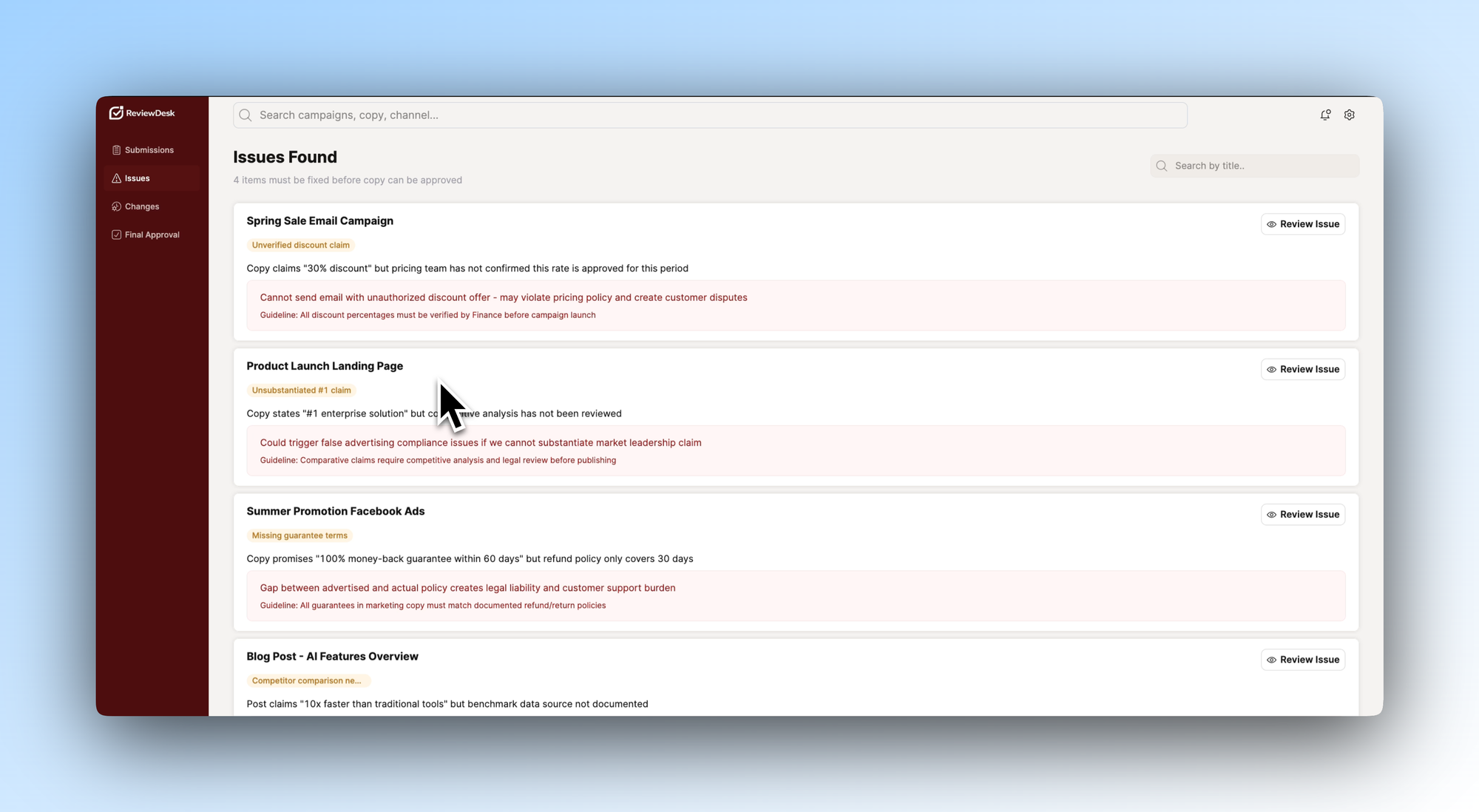
The Issues tab shows one way to design a clear log of everything flagged during review. Each issue is tied to a specific submission, labelled by issue type - unverified discount claim, unsubstantiated #1 claim, missing guarantee terms - and accompanied by a plain-language explanation of why it's a problem and which guideline applies.
This kind of structure turns vague feedback into actionable, traceable items. Reviewers know exactly what needs fixing and why; submitters have a clear brief for revisions. In your own build, you'd map issue types and guidelines to your actual compliance and brand standards.
Changes: tracking revisions before re-review
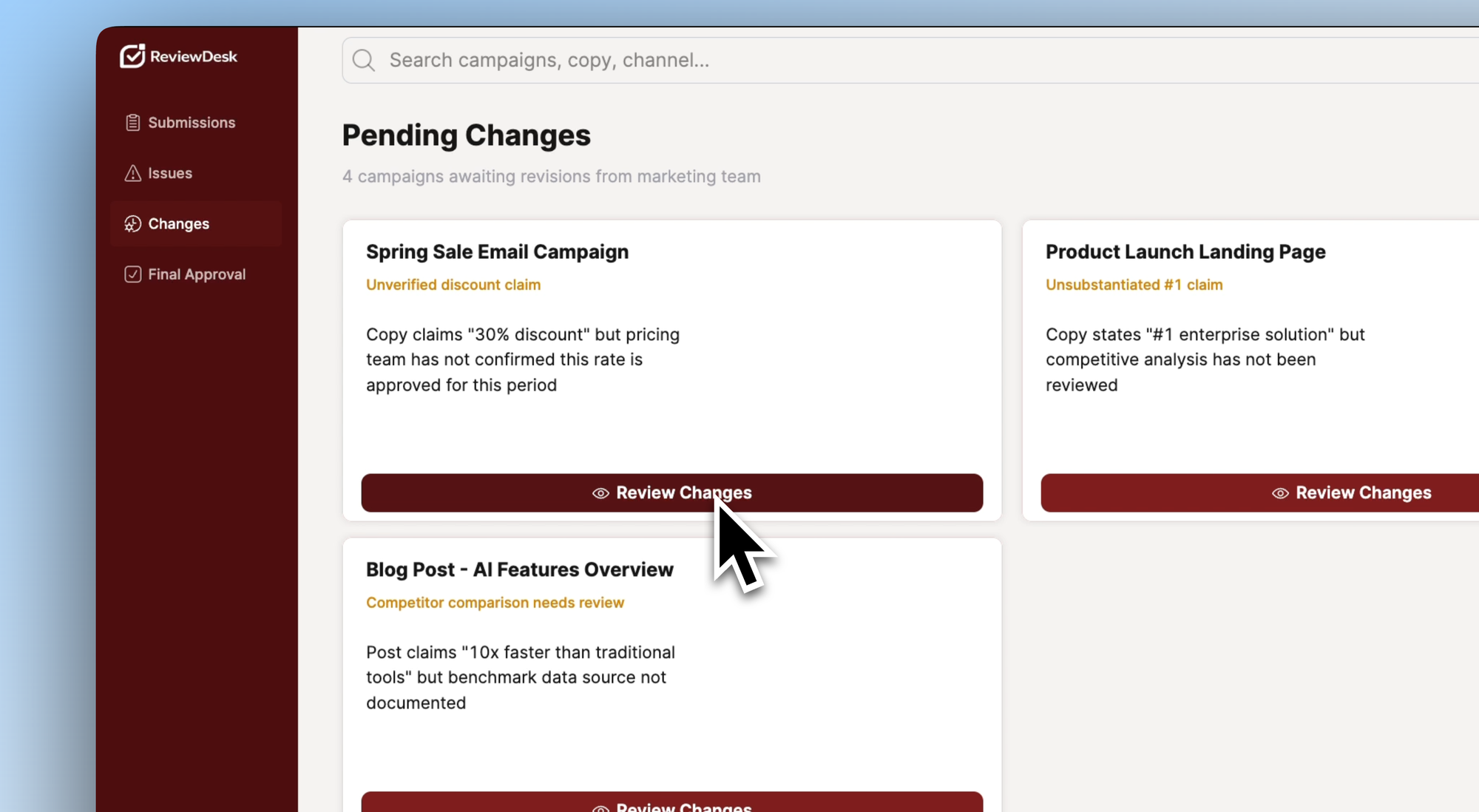
The Changes tab illustrates how pending revisions can be kept visible and organised while they're with the submitting team. Each card shows the original issue flagged alongside the campaign it belongs to, so reviewers can quickly pick up where they left off once changes come back in.
This stage is often where reviews stall - revisions get made but nobody follows up, or the updated version gets lost in a thread. A dedicated changes view keeps the handoff clean and ensures nothing gets stuck waiting. You could adapt this view to include due dates, revision history, or ownership fields depending on how your team manages turnaround.
Final Approval: the last gate before publishing
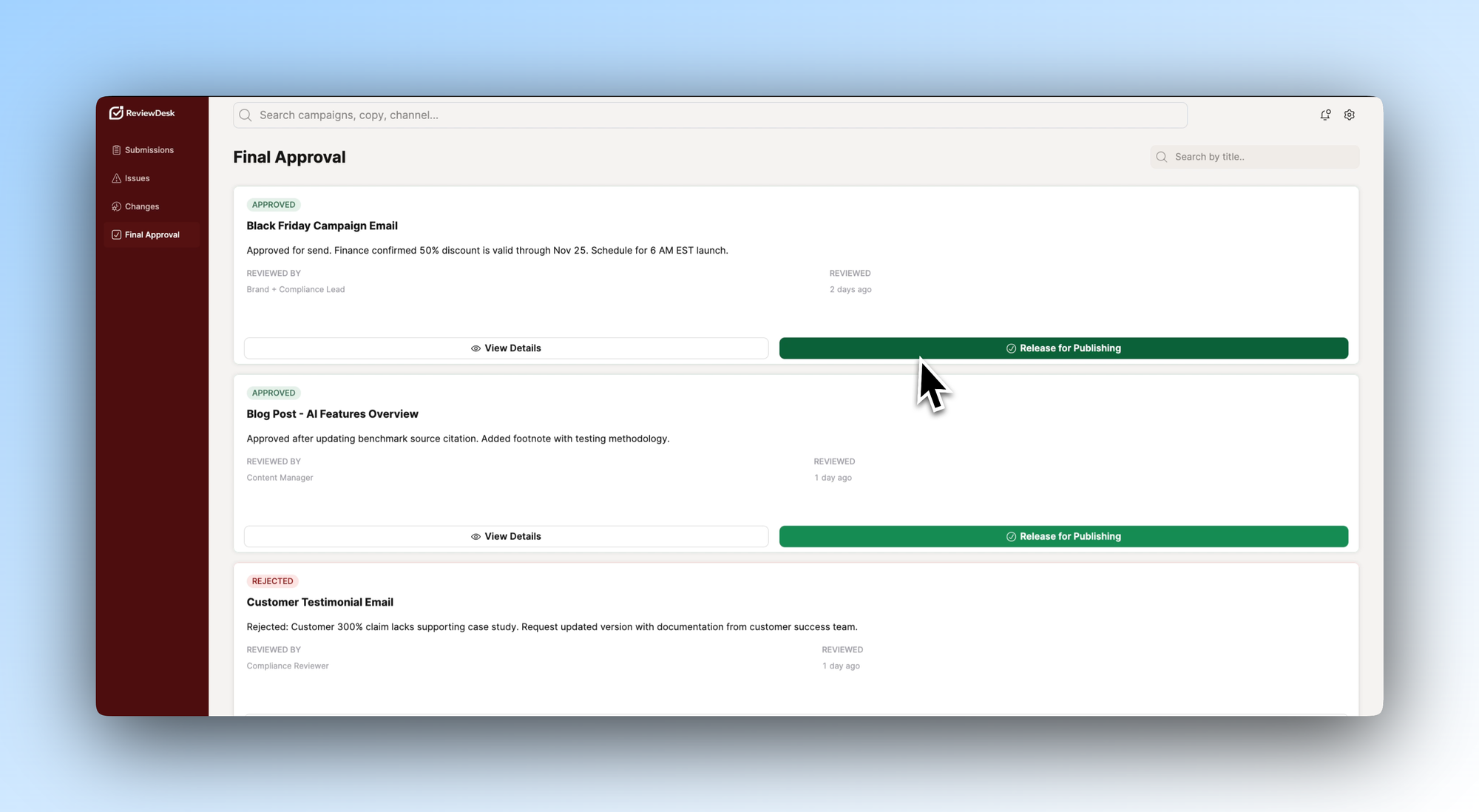
The Final Approval tab shows how a team might design the last stage of the workflow - a clear view of what's approved, what's rejected, and what's ready to release. Each item shows who reviewed it, when, and the reasoning behind the decision, creating a full audit trail without any extra admin.
The approve/reject status and ‘Release for Publishing’ action make the final step deliberate and documented. In a compliance-sensitive environment, that paper trail matters. You could extend this view to include multi-stage sign-off, integration with your publishing or CMS tools, or escalation paths for rejected items.
Download the template and get building ⬇️
Content review failures rarely happen because teams don't care about quality - they happen because the process isn't built to catch problems before they ship. ReviewDesk is a template for rethinking that: a practical, adaptable blueprint that shows what a structured review workflow could look like, built on Retool and shaped around how your team actually operates.
