


Hiring and talent allocation decisions are only as good as the information behind them. But for most teams, that information is scattered - CVs in email threads, notes in spreadsheets, feedback in Slack - with no consistent way to evaluate, compare, or track candidates across roles and projects.
For hiring managers and talent evaluators who need to make fast, confident decisions, that lack of structure is a real problem. It slows down hiring, increases the risk of a bad match, and makes it almost impossible to build institutional knowledge about your talent pool over time.
To address these challenges, we built a Retool template - ‘SkillLayer’ - that shows what a structured, data-informed talent evaluation tool could look like - think Upwork-style profile management, but built entirely around your internal processes and criteria. It's a blueprint for inspiration, not a finished product.
Built on Retool, your team can adapt it to your specific roles, scoring frameworks, and workflows, and get to production in a fraction of the time of traditional development.
- Education
- Healthcare
- Media
- eCommerce
and more! Sign up for our newsletter to ensure you're always getting access to our free resources.
Pipeline: evaluate candidates with the full picture
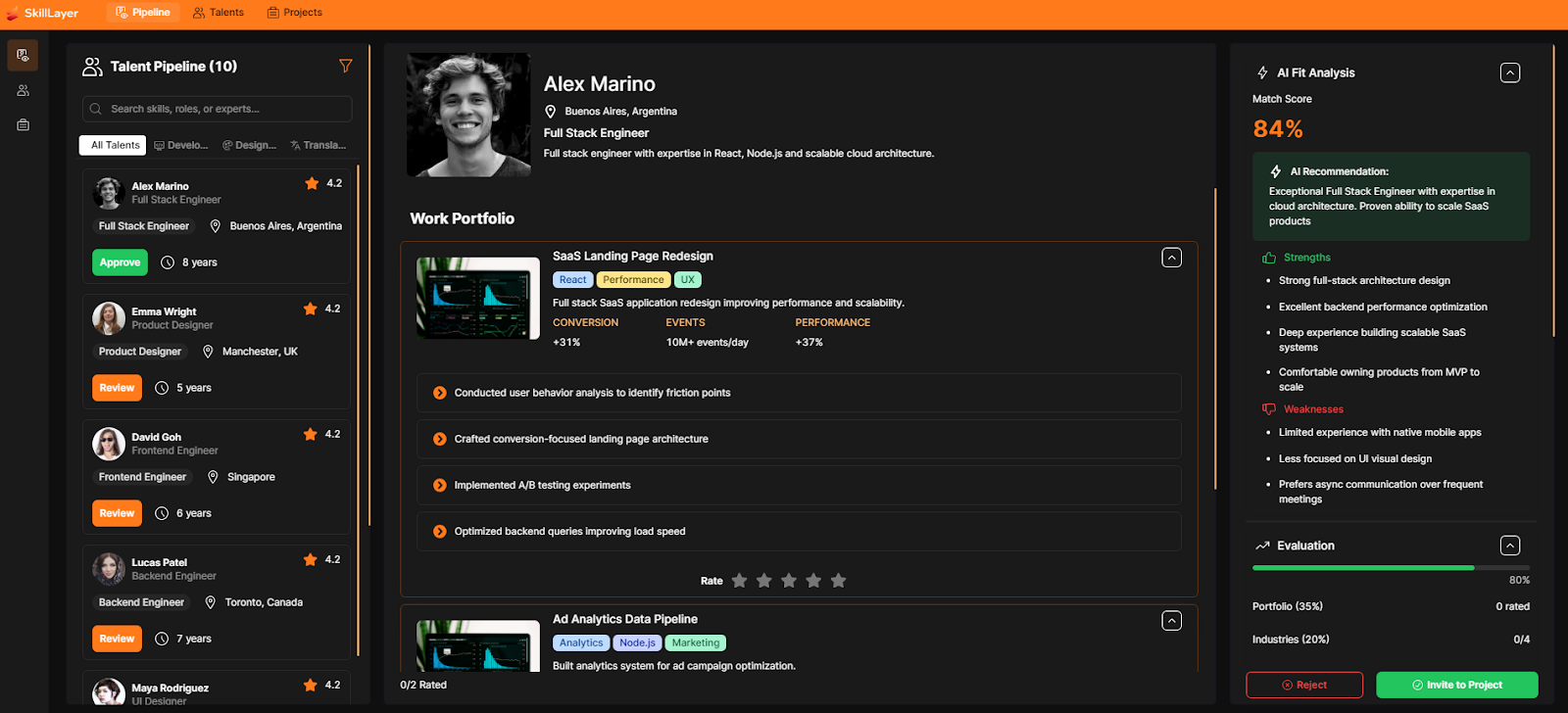
The Pipeline tab illustrates how a hiring manager might design a structured candidate review view. A filterable list of candidates sits on the left - searchable by skill, role, or specialism - with each profile showing role, location, experience, and current status at a glance.
The central panel shows a candidate's full profile: a work portfolio with project-level detail, tagged skills, and measurable outcomes. On the right, an AI Fit Analysis panel surfaces a match score, a plain-language recommendation, and a structured breakdown of strengths and weaknesses against the role - turning a subjective gut-feel decision into something more consistent and defensible.
Approve, reject, or invite to project directly from this view. In your own build, you'd define the scoring criteria, role requirements, and evaluation dimensions that matter to your team, and connect the tool to wherever your candidate data actually lives.
Talents: a browsable pool of available specialists
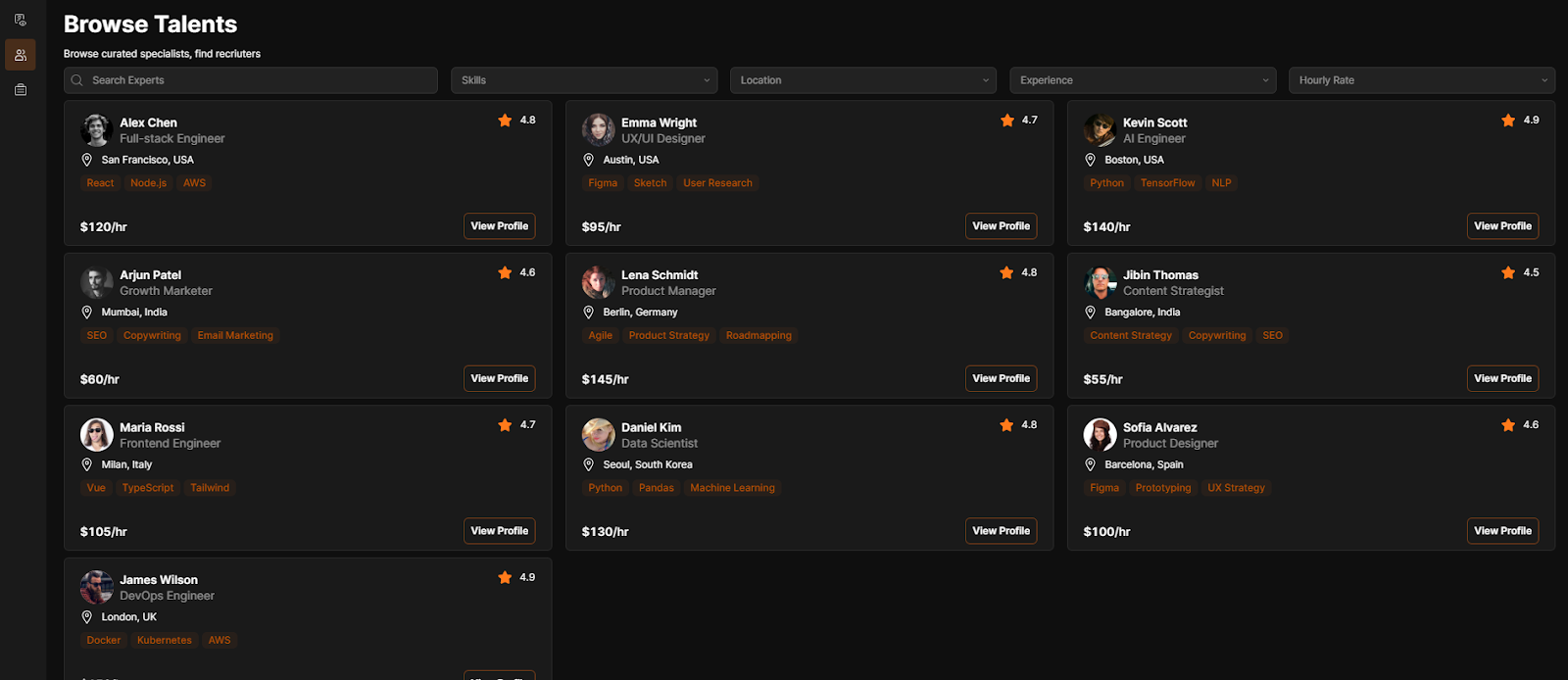
The Talents tab shows one way to design a searchable directory of candidates or contractors. Each card displays role, location, key skills, rating, and hourly rate - filterable by skills, location, experience level, and rate - making it easy to scan a broad pool and surface the right profiles quickly.
This kind of view is particularly useful for teams managing a recurring pipeline of freelancers, contractors, or internal talent across projects. Rather than starting from scratch each time a role opens up, you have a living directory to draw from. You'd adapt the filters and card metadata to reflect the attributes that matter most for how your team evaluates and allocates people.
Projects: matching the right people to the right work
The Projects tab is designed to close the loop between evaluation and allocation - connecting the talent profiles and assessments from the previous tabs to the actual projects and roles they're being considered for. In your own build, this is where you'd surface open roles, track assignments, and give hiring managers and team leads a clear view of who is working on what and where the gaps are.
Download the template and get building ⬇️
Bad hiring decisions rarely come from a lack of candidates - they come from a lack of structured information at the moment it matters most. SkillLayer is a template for rethinking that: a practical, adaptable blueprint that shows what a data-informed talent evaluation tool could look like, built on Retool and shaped around how your team actually assesses and places people.
